Serving Meriden, CT and surrounding areas. (475) 775-2927
A tilting deck or settling addition starts underground. We install concrete footings in Meriden dug to the right depth for Connecticut winters, inspected before the pour, and built to hold for decades.
Concrete footings in Meriden means excavating to at least 42 inches below grade - Connecticut's required frost depth - setting wooden forms, and pouring a reinforced base that a city inspector reviews before any concrete is placed. Most residential footing jobs take one to two days of active work, with a short curing period before the structure above can be built. The result is a stable foundation base that will not shift when the ground freezes or saturates during Meriden's wet springs.
A lot of homeowners in Meriden come to us when a deck or porch starts pulling away from the house or tilting after a hard winter - symptoms that almost always trace back to footings that were too shallow, too small, or never installed at all. Adding a new structure without properly engineered footings is one of the most common mistakes in home improvement, and it shows up fast in a city that gets as many freeze-thaw cycles as Meriden does. If your project also involves above-ground structural concrete, we can coordinate with foundation installation as part of the same scope.
Every footing project starts with an on-site visit - we assess the soil, confirm access for equipment, and give you a written estimate before anything is decided. We also handle the permit from the Meriden Building Department so you have an independent inspection before the concrete is buried.
If a structure that used to sit flat and flush is now leaning, sloping, or has a gap opening where it meets your home, the footings underneath may have shifted or settled. This is especially common in Meriden's older neighborhoods where original footings may not have been dug to today's depth requirements. A tilting deck is a safety issue, not just a cosmetic one.
Horizontal or stair-step cracks near the base of a foundation wall, or cracks running across a concrete slab, can signal that footings below are moving. In Meriden, the clay-heavy soil in parts of the city swells and shrinks with moisture, pushing footings out of position over time. A crack that keeps widening across multiple seasons is a clear sign something needs attention underground.
Any new structure attached to or near your home needs proper footings before construction begins. If you are planning a project and have not yet thought about what goes underground, that conversation needs to happen before anything is built above it. Skipping footings is the most common reason new decks and additions fail within a few years.
When footings shift, the structure above them shifts too - sometimes just enough to throw door frames and window frames slightly out of square. If a door that used to close easily now sticks or drags and there is no obvious reason like humidity, it is worth having the foundation and footings checked. This symptom is easy to dismiss but often points to something happening underground.
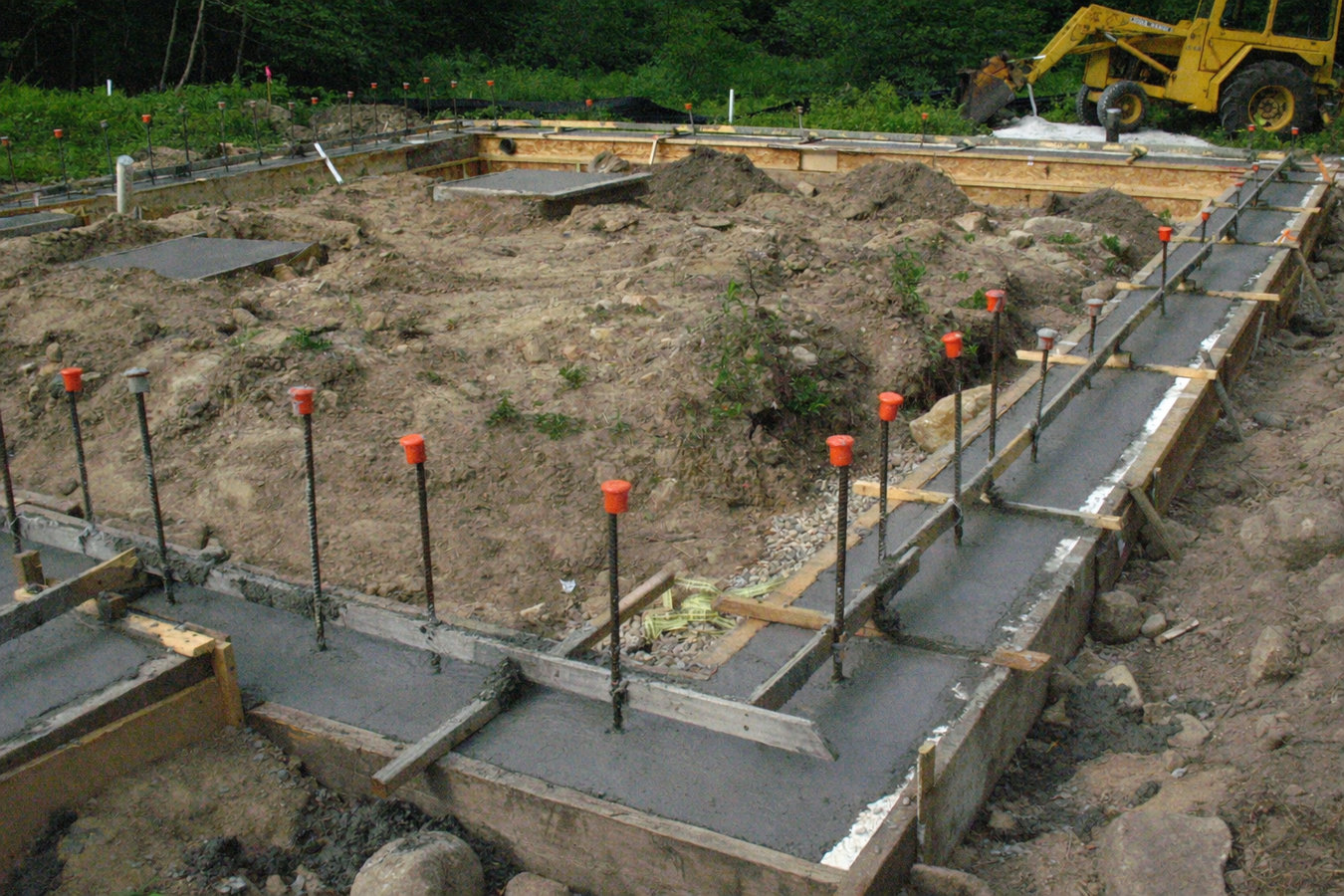
We dig to the correct frost-line depth for Connecticut - at least 42 inches - set up wooden forms to shape each footing, place rebar reinforcement inside the form, and pour the concrete in a single operation. The size and number of footings depend on what is being built above them: a small shed needs less than a two-story addition, and a contractor who applies the same spec to both is cutting corners somewhere. Before we pour, we wait for the city inspector to verify depth and placement - that inspection is a condition of the Meriden Building Department permit we pull for you. We also handle foundation raising when your existing structure needs to be lifted and new footings placed beneath it.
Soil conditions are assessed before we quote, not discovered mid-job. In parts of Meriden near the Quinnipiac River valley, clay-heavy soil requires wider footings or a gravel drainage layer beneath the pour - factors that affect both the cost and the longevity of the work. The American Concrete Institute publishes the structural standards we follow for mix design and reinforcement, and the Connecticut State Building Code sets the minimum depth and size requirements we meet on every job.
Individual concrete columns set at required depth - the standard choice for deck posts, porch columns, and shed foundations.
A continuous poured base running beneath a foundation wall or addition - suited for larger structures that need load distributed along a line rather than at points.
On-site soil assessment and sizing appropriate for Meriden's clay-heavy soils and existing mid-century construction - not a one-size-fits-all approach.
Steel reinforcement within the footing to resist cracking under load - standard on any footing carrying significant weight or subject to lateral movement.
Connecticut requires footings to be placed at least 42 inches below the surface - significantly deeper than the requirement in most southern or mid-Atlantic states - because the ground here freezes hard in winter and that frozen ground moves. In Meriden specifically, the combination of cold winters and clay-heavy soil in the Quinnipiac River valley creates a double challenge: the frost can push a shallow footing upward, and the clay swells and contracts with moisture changes across seasons. A footing installed at the right depth in the right soil will hold its position for decades. One installed at 24 inches in clay soil might start moving after the first hard winter.
Meriden also has a large stock of homes built before 1960 - many with original footings that were installed under older standards. If you live in one of those homes and are adding a deck, finishing a basement, or repairing a porch, the new footings need to meet today's code even if the existing ones do not. We serve homeowners throughout the region, including Cheshire and Southington, where the same frost depth and soil conditions apply.
We respond within 1 business day to schedule a free on-site visit. We cannot quote footing work accurately without seeing your property - soil conditions, access, and site grade all affect the scope. There is no charge for the visit and no obligation.
We submit the permit to the City of Meriden Building Department before any digging begins. Approval typically takes a few business days to two weeks. We handle the application - you do not have to navigate city hall.
The crew digs to at least 42 inches, sets wooden forms, and places rebar inside. A city inspector visits to verify depth and placement before any concrete is poured. This inspection is the most important protection you have as a homeowner.
Concrete is poured into the forms and the crew levels the top surface. Forms come off after 24 to 48 hours. The footings continue curing for several weeks - you can begin building above them once they have had adequate time to set. The site is backfilled and cleaned before we leave.
We respond within 1 business day. No obligation - just a written estimate and a straight answer about what your project needs. After you submit, someone from our office will call to schedule your site visit.
(475) 775-2927Connecticut requires footings at 42 inches below grade, and we dig to that depth on every job. It is the single most important factor in whether your footing holds through Meriden winters - and it is something you can verify yourself before the concrete is poured.
We pull the required Meriden Building Department permit on every footing job, which means a city inspector independently verifies the depth and placement before we pour. You have an extra set of eyes on the most critical step - that is worth more than any contractor's promise.
We serve 12 cities across central Connecticut and know that Meriden's Quinnipiac River valley clay behaves differently from sandy Cheshire soils or rocky ground near the Hanging Hills. We assess your specific site before quoting - not after work begins.
We are registered with the Connecticut Department of Consumer Protection and carry full liability insurance and workers' compensation on every project. You can verify our registration and coverage before you sign - we expect you to, and we make it easy.
Footing work is invisible once it is done - the only way to know it was done right is to work with someone who does it right before the concrete covers it up. Contact us and let us walk you through what your project needs.
When your existing structure needs to be lifted and new footings placed beneath it, we handle the full scope.
Learn moreFull foundation systems for new construction and additions, built on properly sized and inspected footings.
Learn morePermit approvals take time - reach out now so your project is ready to break ground when the weather cooperates.