Serving Meriden, CT and surrounding areas. (475) 775-2927
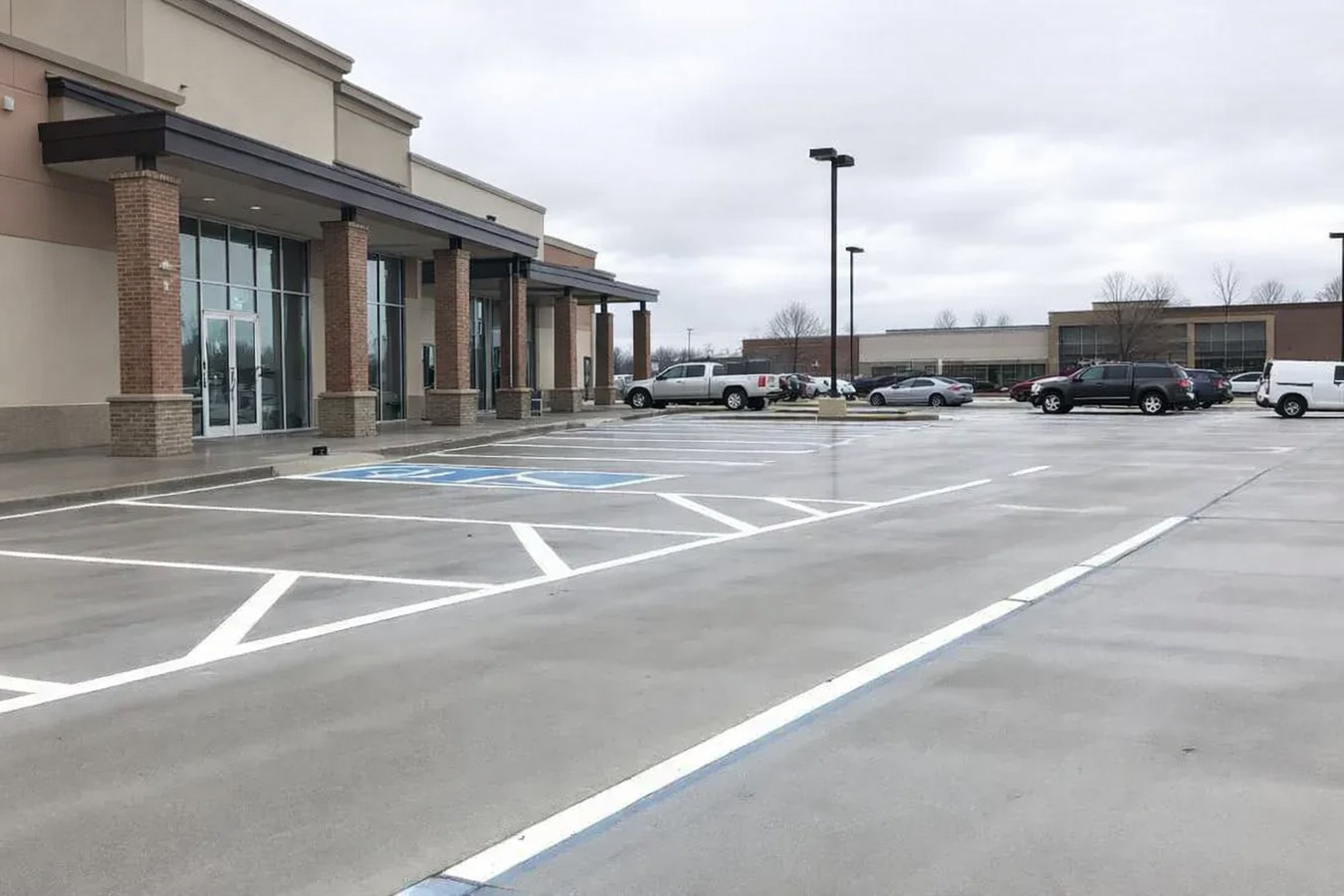
Crumbling asphalt and standing water are costing you tenants and curb appeal. We build concrete parking lots in Meriden that handle Connecticut winters, meet city drainage rules, and hold their value.
Concrete parking lot building in Meriden means removing the existing surface, grading the ground for proper drainage, compacting a gravel base, and pouring a reinforced slab - most small commercial lots take three to seven days of active work, followed by at least a week before passenger vehicles can use the surface. The result is a durable, low-maintenance lot that handles Connecticut freeze-thaw cycles far better than asphalt and does not require periodic resealing every few years.
Many multi-family and commercial properties in Meriden have aging asphalt lots that were never built to modern drainage or load standards. Repeated patching buys time but not much else - once the base fails, the surface keeps breaking no matter what you put on top. At that point, a full replacement with properly reinforced concrete is the more cost-effective long-term answer. If your property also has a driveway that needs attention, we handle concrete driveway building as part of the same project.
Every parking lot project begins with an on-site visit - not a phone quote. We look at the size, the existing surface, how water currently drains, and what site access the concrete trucks will have. You get a written estimate that covers every line item before anything is decided.
If you have patched the same cracks more than once and they keep reappearing - especially after winter - the base beneath the surface has shifted or eroded. In Meriden's climate, water gets into a crack, freezes, expands, and turns a small problem into a large one very quickly. Repeated patching is a sign you are spending money on a surface that has already failed structurally.
Standing water after a storm means the lot is no longer draining properly - either because the surface has settled unevenly or because the original drainage design was inadequate. In Meriden, where spring snowmelt and heavy rain events are common, a lot that holds water is also accelerating its own deterioration. That water has nowhere to go except into the cracks and down to the base.
Concrete that looks like the top layer is peeling or crumbling - sometimes called spalling - has been damaged by repeated freeze-thaw cycles or by road salt tracked in from Meriden's winter-treated streets. Once the surface layer breaks down, the damage accelerates. If this is happening across more than a small section, repair is rarely cost-effective compared to full replacement.
If your parking area was designed for fewer vehicles or lighter loads than it now handles, you may be seeing stress cracks, edge failures, or surface wear that reflects that mismatch. This is especially common in Meriden's older multi-family and commercial properties where use patterns have changed over the decades.
Every parking lot project starts with demolition of the existing surface - whether that is old asphalt, gravel, or bare ground - followed by grading for drainage and compacting a stable gravel sub-base. We place the reinforcement grid, set forms along the perimeter, and pour the concrete in a continuous operation. Control joints are saw-cut at regular intervals after the pour, creating the straight lines across the surface that allow the slab to move with temperature changes without cracking randomly. Once the concrete cures, we apply a joint sealant and a penetrating surface sealer to protect against road salt and moisture. We also handle the City of Meriden permits and can coordinate with concrete footings if your project requires structural supports for a canopy, fence, or bollards.
Drainage is designed before the pour, not after - we calculate the slope so water sheds toward the edges or designated drain points, not toward your building foundation. The American Concrete Pavement Association (ACPA) provides design guides for parking lot concrete work, and we build to those standards for thickness and reinforcement. Connecticut stormwater rules, administered through the CT DEEP Stormwater program, apply to new paved surfaces - we design drainage to meet those requirements from the start.
The most common choice for commercial and multi-family properties - 4-to-6-inch reinforced slab with a broom finish and saw-cut joints.
Thicker pour with heavier rebar for properties that regularly handle delivery trucks, equipment, or loaded vehicles.
Includes grading, catch basins, or swales designed to meet Meriden planning requirements and protect neighboring properties.
Full demolition of old asphalt, base assessment and rebuild, and new concrete pour - common for Meriden properties with aging mid-century lots.
Meriden sits in central Connecticut and experiences some of the most demanding conditions for concrete pavement in New England. Temperatures swing above and below freezing dozens of times each winter - water gets into the tiniest surface pore, freezes overnight, expands, and breaks the concrete from the inside out. Using an air-entrained mix designed for this climate is not optional here - it is the difference between a lot that looks like new after five winters and one that is already crumbling at the edges. Meriden's older commercial corridors also have many lots that were poured on inadequate bases, meaning the freeze-thaw damage shows up faster than it should.
Connecticut stormwater rules mean that adding a new paved surface can trigger drainage requirements from the Meriden Planning and Zoning Department - something many property owners do not anticipate until the permit process surfaces it. We work with property owners across central Connecticut, including New Haven and Waterbury, and we know what the permit process typically requires so there are no surprises once construction starts.
We respond within 1 business day to schedule a free site visit. A contractor who quotes a parking lot without seeing it is guessing - we measure the area, assess drainage, and review site access before giving you a written price.
We submit the permit application to the City of Meriden and work through any drainage requirements upfront. Most permits take a few business days to a couple of weeks - we handle the process so you do not have to chase city hall.
The crew removes the existing surface, grades the ground for drainage, and compacts a gravel sub-base. This step determines whether your lot lasts 10 years or 30 - we do not rush it.
Concrete is placed and finished in one continuous operation, and control joints are cut before the slab fully sets. Keep vehicles off for seven days minimum. We walk the finished lot with you before we leave - check that it drains correctly and that the joints are clean and even.
We respond within 1 business day. No obligation - just a written estimate that breaks down every part of the job. After you submit, someone from our office will call to schedule your site visit.
(475) 775-2927We visit your property before giving you a number - every time. A concrete truck's access, the existing base condition, and your drainage situation all affect the final cost. We verify all of it in person so the price you agree to is the price you pay.
We pull the required permits from the City of Meriden and design drainage to meet Connecticut stormwater rules before a single truck shows up. Property owners in Meriden's 12 service cities know we handle this paperwork - so they do not have to.
We are registered with the Connecticut Department of Consumer Protection as required by state law, with liability insurance and workers' compensation on every job. You can verify both before signing anything - we expect you to.
We use concrete mixes specifically formulated for Connecticut's freeze-thaw cycle - the same standard recommended by the American Concrete Pavement Association for parking surfaces in cold climates. This is the single biggest factor in how long your lot holds up.
Parking lot work is a significant investment - you deserve a contractor who has seen your site, knows the local permit process, and builds to the right spec for Connecticut weather. Reach out and let us show you what that looks like.
Structural footings for canopies, bollards, light poles, and fencing that tie into your new parking lot.
Learn moreConnect your new parking lot to a properly built driveway approach - one contractor handles both.
Learn moreConcrete season in Connecticut is short - lock in your spot now before the spring schedule fills up and you are waiting until fall.