Serving Meriden, CT and surrounding areas. (475) 775-2927
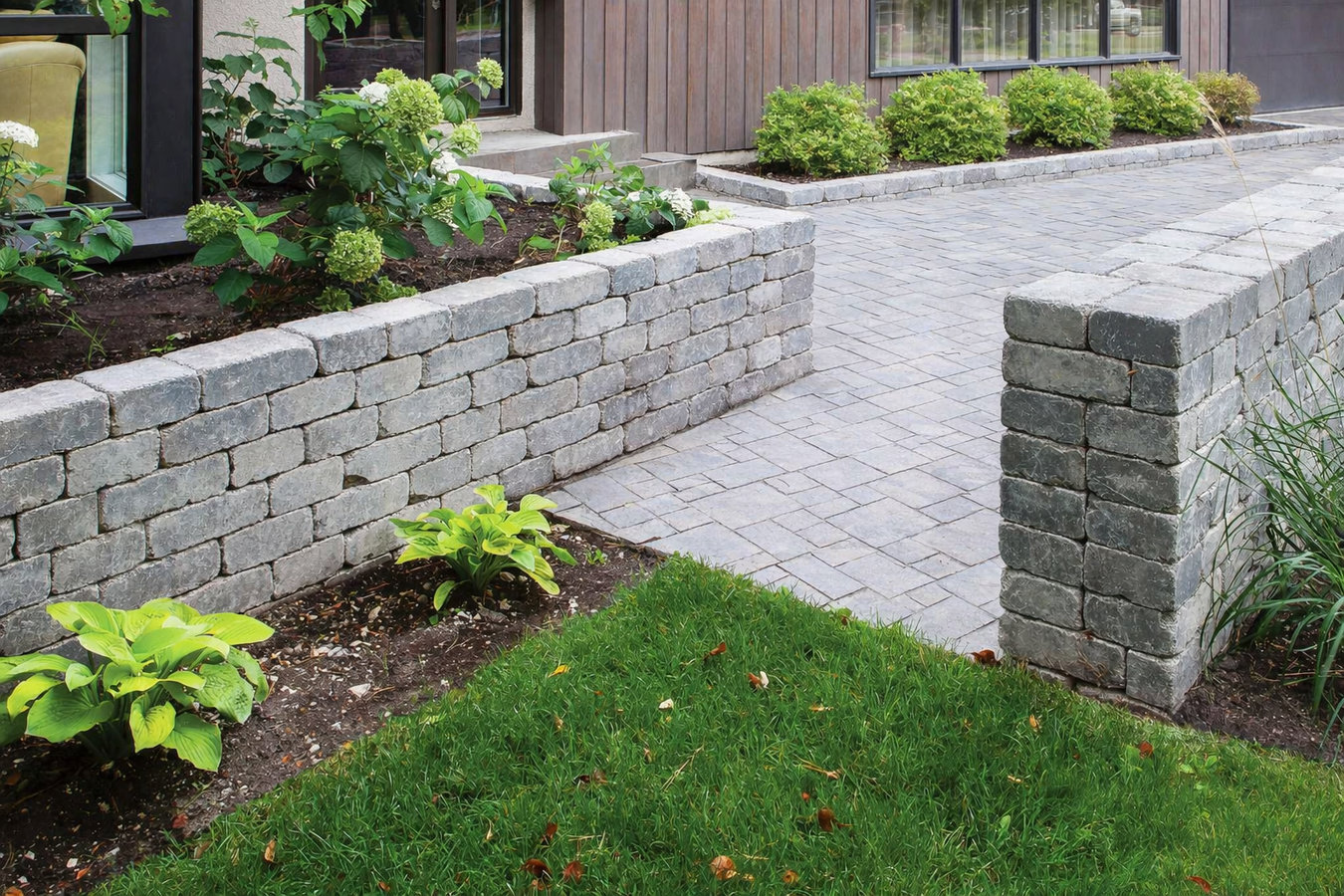
A shifting slope, a leaning old wall, or soil washing toward your home after every storm - these problems get worse every winter. We build concrete retaining walls in Meriden that hold through Connecticut freeze-thaw cycles.
Concrete retaining walls in Meriden start with excavation, a compacted gravel base set below the frost line, and then either poured concrete forms or concrete block laid in courses with drainage material behind each layer - most residential walls take one to four days of active construction, with total timelines of two to four weeks including permits and scheduling. The result is a wall built to handle Connecticut clay soils and repeated freeze-thaw cycles, not just look good on installation day.
Many Meriden properties sit on grades that make erosion, soil movement, and drainage problems a real concern - especially on lots near the Hanging Hills where elevation changes are significant. Whether you have an old block wall that is leaning forward, a slope that washes out after every rainstorm, or a steep grade that makes part of your yard unusable, properly built concrete retaining walls are usually the most durable long-term answer. We also build concrete floor installation for basements and garages if you have interior projects alongside your outdoor work.
Every project starts with an in-person site visit. We look at the slope, the soil, how water moves across your yard, and any site-specific challenges before giving you a written estimate. No phone quotes, no surprises mid-job.
If soil, mulch, or gravel migrates down a slope after heavy rain, the ground is actively eroding. Meriden receives roughly 47 inches of precipitation per year spread across all seasons, so there is no dry stretch that gives an eroding slope a break. A retaining wall stops that movement permanently.
A wall that is visibly tilting forward or has sections bowing outward is under stress it was not built to handle. This is especially common in Meriden with older walls that have endured decades of freeze-thaw cycles without adequate drainage. A leaning wall will not correct itself - when it fails, it can damage landscaping, fencing, and nearby structures.
When a sloped yard lacks proper grading or a wall to redirect water, rain runs toward the lowest point - which is often your foundation. Standing water near basement walls or damp spots inside after storms can signal that a retaining wall combined with proper grading is part of the solution. Left unaddressed, that water causes serious foundation problems over time.
Hairline cracks in concrete are normal, but cracks that are widening, running horizontally, or accompanied by any movement are warning signs. In Meriden's climate, a crack that goes through winter unrepaired will almost always be wider by spring - water enters, freezes, and forces the crack open further. Getting a contractor to evaluate it before the next winter season is almost always cheaper than waiting.
Every retaining wall project starts with excavation to set the footing below Connecticut's frost depth - roughly 42 to 48 inches below grade. We compact a gravel base, build the wall itself, and install perforated drain pipe and gravel backfill behind the wall so water pressure never has a chance to build up. Drainage is not an add-on here - it is part of every wall we build. The concrete floor installation and concrete steps construction we offer can often be scheduled alongside a retaining wall project to minimize disruption to your property.
For walls taller than four feet, we handle the Meriden building permit application from start to finish - you do not have to navigate city hall or coordinate with inspectors. We also assess whether tiered walls make sense for your site, which can be a safer and better-looking solution than one tall wall for properties with major grade changes near the Hanging Hills neighborhoods.
Formed and poured in place for maximum strength - well suited to larger projects and walls that need to handle significant soil pressure.
Concrete masonry units stacked in courses - a practical choice for mid-size walls and projects where the wall will be partially visible as a design feature.
Two or three shorter walls stacked in tiers to manage steep grades - spreads the load, reduces pressure on any single wall, and often looks more natural in a yard.
Lower walls used to define planting beds or level a small grade change - a good fit for homeowners who want a neat, finished look in their yard.
Meriden sits in central Connecticut with terrain that includes real elevation changes - particularly on the west and north sides of the city near Hubbard Park and the Hanging Hills ridge. Many residential lots in these areas sit on grades steep enough that soil movement and drainage problems are an everyday reality, not a theoretical concern. Add in the clay-heavy soils common throughout central Connecticut, which hold water rather than letting it drain away, and you have conditions where drainage behind a retaining wall is not optional - it is what separates a wall that holds for 50 years from one that leans within five. Meriden also has a large share of homes built before 1980, many of which have original retaining walls made from railroad ties, dry-stacked stone, or older concrete block that are reaching the end of their useful life.
Connecticut's freeze-thaw cycles add another layer of stress. Water gets into the soil behind a wall, freezes, expands, and pushes against it repeatedly from November through March. A wall built without a frost-depth footing will shift. We serve homeowners throughout the region - whether you are in Naugatuck or Middletown, the same principles apply. Every wall we build is designed around what Connecticut's climate actually demands, not a generic spec that might work in a milder state. The National Concrete Masonry Association publishes the design guidelines our work follows.
We respond within 1 business day to schedule a free on-site visit. A retaining wall quote cannot be done accurately by phone - we need to see your slope, your soil, and how water moves across your yard before giving you a written estimate.
For walls over four feet, we file with Meriden's Building Department before any work starts. Permit processing typically takes a few business days to two weeks - we handle every step and keep you updated on timing.
The crew digs to below the frost line, compacts a gravel base, and sets up the drainage system behind the wall as it goes up. This is the most disruptive part - expect equipment on your property and the area to look rough before it looks finished.
Construction typically takes one to four days once it starts. We backfill, clean up the site, and coordinate any required city inspection. For poured concrete, you will get specific guidance on the curing window before you landscape or work around the wall.
We respond within 1 business day. No obligation - just a written estimate and an honest assessment of what your wall project actually needs. After you submit, someone from our office will call to schedule a free site visit.
(475) 775-2927We file with Meriden's Building Department and coordinate all required inspections for walls over four feet. You never have to navigate the permit process yourself, and the work is documented if you sell the home.
We hold the Home Improvement Contractor registration required by the Connecticut Department of Consumer Protection. Liability insurance and workers' compensation coverage are in place on every job - verifiable before you sign anything.
We work throughout New Haven and Hartford counties, which means we know local frost depths, soil conditions, permit timelines, and the specific demands of retaining wall work in Connecticut's climate. Local knowledge shows in how each job is designed and built.
Every wall we build includes gravel backfill and drainage pipe behind it. Poor drainage is the leading reason retaining walls fail. We do not offer a cheaper wall without drainage - because that wall will fail, and that failure becomes your problem.
We build walls designed for what Connecticut actually demands - deep footings, real drainage, and materials that hold up to years of freeze-thaw cycles. Have questions? Contact us and ask before you commit to anything.
If your retaining wall project is part of a larger yard or basement renovation, we can schedule a concrete floor pour in the same visit.
Learn moreSteps built into or alongside a tiered retaining wall make grade changes safe to navigate and add a finished look to the project.
Learn moreSpring and fall slots fill quickly - reach out now before the next freeze-thaw season does more damage to your slope or existing wall.