Serving Meriden, CT and surrounding areas. (475) 775-2927
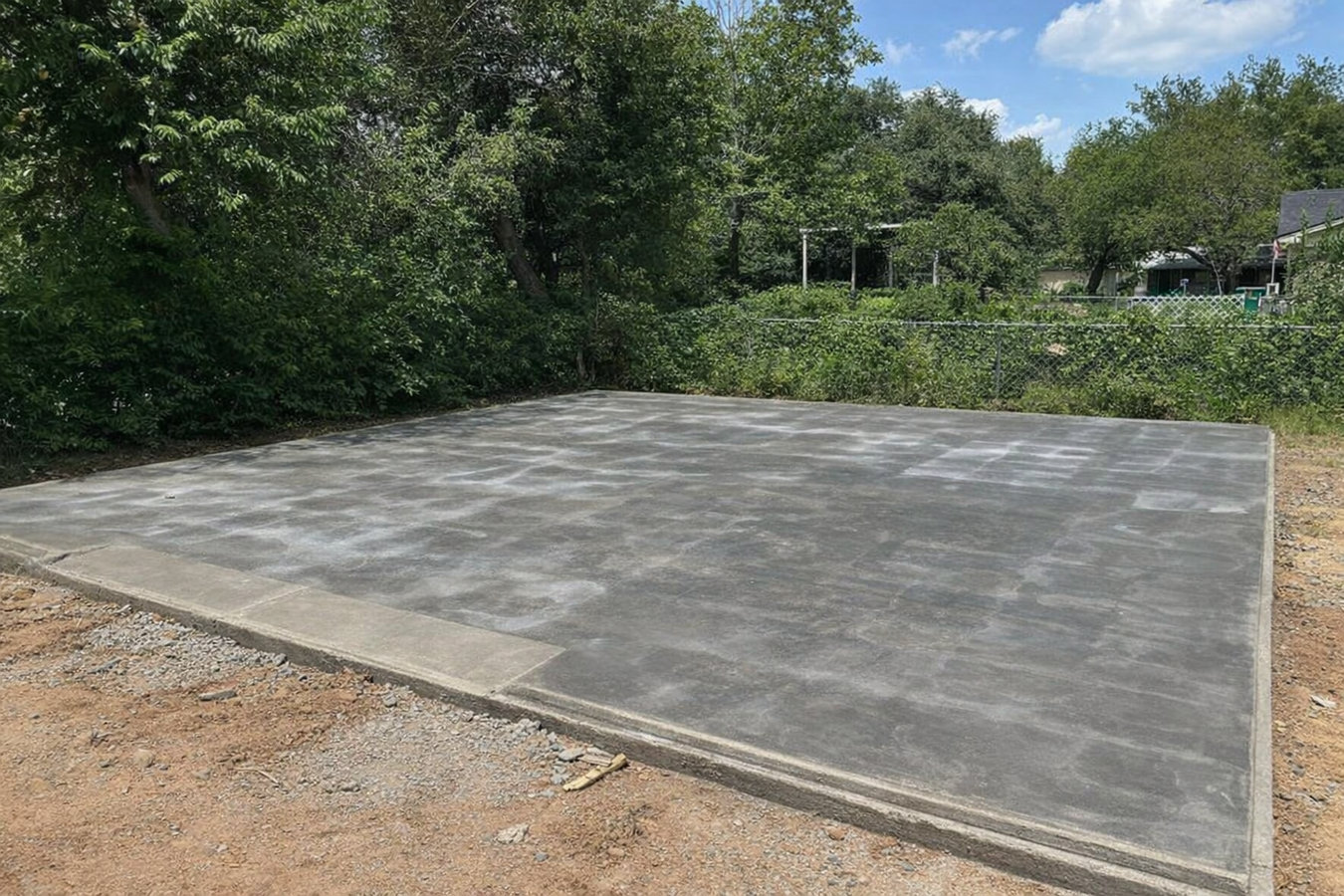
A new build or addition needs a foundation that stays level through decades of freeze-thaw cycles. We pour properly reinforced slabs with frost-depth footings and handle every permit in Meriden.
Slab foundation building in Meriden means excavating to frost-depth, compacting a gravel base, laying a moisture barrier and steel reinforcement, and pouring a 4-to-6-inch concrete slab with thickened edge footings - most residential jobs take one to three days of site preparation plus one day for the pour, followed by a seven-day cure before framing can begin.
If you are building a new home, garage, workshop, or addition in Meriden, the slab is the first concrete step - and the one that determines whether everything built on top of it stays level and stable. Connecticut requires footings to be dug below the frost line, which is deeper here than in most of the country, and that requirement directly affects both cost and timeline. Many homeowners start asking about slab foundations at the same time they are researching foundation installation more broadly, and we can help you understand which approach fits your project.
Every project starts with an on-site estimate. We look at your lot, assess the soil, and give you a written breakdown before anything is decided - no phone guesses, no vague ranges.
The most direct sign is simply that you have a new construction project - a home, garage, workshop, or addition - and need a structural base to build on. Without a properly built slab, nothing above it will be level, stable, or structurally sound. If your architect or builder has specified slab-on-grade for your project, this is the service that makes it happen.
Small hairline cracks in concrete are common and usually not a structural concern. But cracks wider than a quarter inch, cracks that run diagonally from door or window corners, or cracks where one side sits higher than the other indicate the slab has moved. In Meriden, this movement is often caused by freeze-thaw pressure on footings that were not dug deep enough.
When a slab shifts even slightly, the walls and door frames above it shift too. If doors that used to swing freely now drag on the floor or fail to latch, or if you notice gaps forming at the tops of frames, your foundation may be moving. This is especially worth investigating in Meriden homes built before the 1970s, when frost-depth requirements were less consistently enforced.
Connecticut springs mean ground moisture is a recurring issue for slab homes in Meriden, particularly near the Quinnipiac River. If you see damp spots on your concrete floor after rain, or water seeping up through existing cracks, the moisture barrier beneath your slab may have failed. A new slab with proper drainage and a continuous moisture barrier stops this problem at the source.
Every slab foundation project begins with site preparation: grading and compacting the soil, laying a gravel drainage layer, and installing a plastic moisture barrier across the entire footprint. Steel reinforcing bars are set in a grid pattern on top of that barrier before a single yard of concrete goes in. The edge footings - the thickened perimeter that carries the structural load - are dug to the frost-depth required by Connecticut for the Meriden area. All of this happens before the pour, and a city building inspector reviews it before the concrete truck arrives. We also handle concrete footings as a standalone service if your project requires isolated footing work rather than a full slab.
Once the pre-pour inspection is complete, the concrete is placed, leveled, and finished to the texture specified for your project - smooth for interior floors, broom-finished for garage slabs or outdoor pads. After the pour, we apply a curing method to keep the concrete from drying too fast, which is critical in Meriden summers and shoulder-season work. We pull every required City of Meriden permit and schedule all required inspections. You receive a written estimate before work begins and documentation that the permit was closed out when the job is done.
The standard choice for new homes, garages, and ADUs - a full-footprint pour with frost-depth edge footings sized for Connecticut.
A broom-finished, slightly thicker pour designed for vehicle loads and the thermal cycles of an unheated space.
Matches existing floor height and ties structurally into your current foundation so the new space feels seamless.
For slabs that have heaved, cracked extensively, or lost their moisture barrier - full removal and new pour on a properly prepared base.
Meriden sits in central Connecticut where the ground can freeze to a depth of 42 to 48 inches in a hard winter. Connecticut building code requires foundation footings to be dug below that frost line so the annual freeze-thaw cycle does not push your foundation up and crack it. This depth requirement means more excavation time and cost than warmer-climate slab builds, but it is what keeps a Meriden foundation level and stable for decades. Parts of the city - particularly neighborhoods near the Quinnipiac River - also sit on wetter, softer soils that demand careful gravel bedding and moisture barrier installation before the pour. A contractor unfamiliar with local soil conditions can get this wrong in ways that show up as water problems years later.
Meriden also has a large share of homes built before 1960, many of which have original stone or brick foundations reaching the end of their useful life. If your project involves replacing one of these older structures, the scope includes demolition and debris removal before any new concrete work begins. We work across central Connecticut, including Waterbury and Southington, where similar frost-depth and soil conditions apply.
We respond within 1 business day to schedule a free on-site visit. Foundation pricing depends heavily on your specific lot - soil type, site access, and drainage conditions all matter - so we never quote over the phone. You get a written estimate that covers every line item.
We apply for the City of Meriden building permit before any digging starts. Plan for one to three weeks for approval depending on the department workload. We handle all the paperwork - you do not need to contact the building department.
The crew grades the site, compacts the gravel base, installs the moisture barrier, and places the reinforcing steel. A city building inspector then visits to verify that footing depths, steel placement, and moisture barrier all meet code before the pour is scheduled.
The concrete is placed and finished in a single day for most residential slabs. We apply a curing treatment to protect the surface. After at least seven days, framing can begin on top. A final city inspection closes out the permit - you receive documentation to keep with your home records.
We respond within 1 business day. No phone guesses - we visit your property, assess the soil, and give you a written price you can rely on. After you submit, someone from our office will call to schedule your free site visit.
(475) 775-2927We pull the required City of Meriden building permit and schedule every required inspection - including the pre-pour inspection that verifies your footing depths and reinforcing steel. You get the closed-out permit documentation when the job is done.
We are registered with the Connecticut Department of Consumer Protection as required by state law, and we carry full liability and workers' compensation coverage on every project. You can verify both before signing anything.
We work throughout New Haven and Hartford counties and know the soil conditions, permit timelines, and frost-depth requirements that apply across this region. That local knowledge is built into every estimate we give.
Every estimate spells out exactly what is included - excavation, gravel base, moisture barrier, reinforcing steel, the pour, finishing, and permit fees - before a shovel touches your property. If something changes during the job, you hear about it before the cost changes.
The American Concrete Institute sets the professional standards that govern how concrete foundations are designed and built. We build to those standards on every job. Have a question? Ask us before you commit to anything.
When your project needs a full basement or a more complex foundation system, we handle the entire installation from excavation to waterproofing.
Learn moreStandalone footing work for additions, porches, or structures that need isolated footings rather than a full slab pour.
Learn moreSpring construction slots in Connecticut fill quickly - reach out now so your project starts in the right weather window, not the next one.